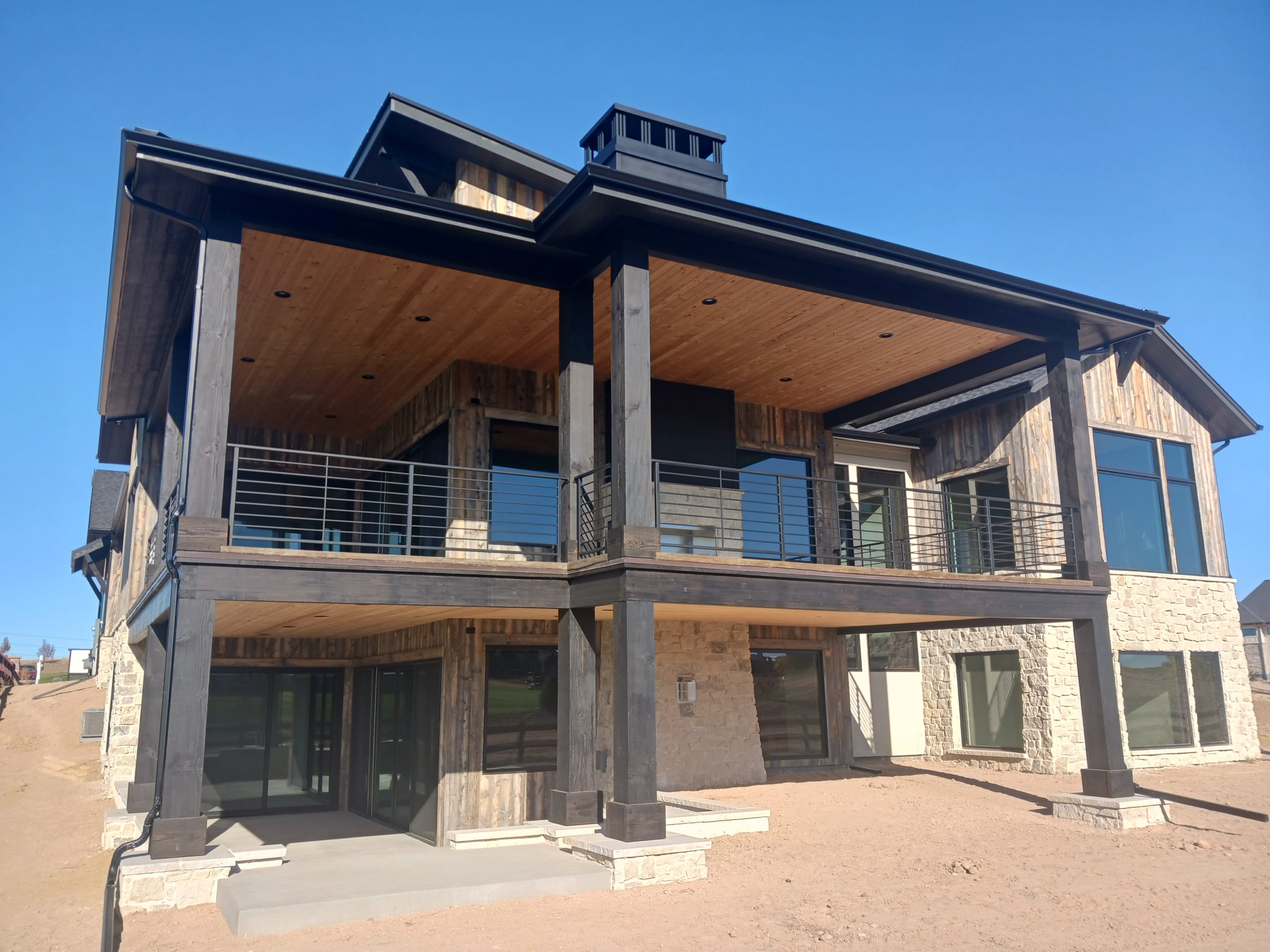
Fall deck staining Fort Collins homeowners complete before the first snow should begin with cleaning, surface inspection, adequate drying time, and a weather window that allows the stain to penetrate and cure properly. Fall preparation helps protect exposed wood from moisture, freezing temperatures, UV exposure, and the repeated expansion and contraction that Northern Colorado decks experience throughout the year.
Key Takeaways
- Clean and inspect deck boards before staining, removing dirt, failing finishes, mildew, and other contaminants that can interfere with adhesion.
- Allow cleaned or stripped wood to dry for about 48 hours or reach a moisture content below 18%, unless the stain manufacturer specifies a different requirement.
- Complete staining during a weather window that meets the product’s temperature, precipitation, humidity, and curing requirements.
- Address cracked, damaged, or deteriorated boards before applying a protective finish.
- Fall deck staining Fort Collins properties should account for approaching snow, freeze thaw exposure, dry air, and strong Front Range UV exposure.
Why Should You Stain a Fort Collins Deck Before Winter?
Staining before winter can help exposed wood resist moisture and weathering, provided the deck is properly prepared and the coating has enough time to cure. A quality exterior wood stain can help reduce water penetration while also adding protection from sunlight and normal outdoor exposure.
Fort Collins decks face several environmental stresses that make preparation especially important. The Front Range sits at roughly 5,000 feet above sea level, increasing UV exposure compared with lower elevations. Snow can also reflect ultraviolet radiation onto exposed surfaces, so deck boards receive meaningful solar exposure even outside the summer season.
Northern Colorado’s dry air also affects exterior wood. Wood can shrink, check, and change moisture content as environmental conditions fluctuate. A stain applied before the wood reaches the manufacturer’s required moisture level may not penetrate or perform as intended.
Old World Painting Family has served Northern Colorado for more than 25 years from our Greeley, Colorado base. We provide professional painting, wood staining, lacquering, and related finishing services for residential and commercial properties throughout the region, including Fort Collins, Loveland, and Windsor. Homeowners can also read our local client reviews in Greeley.
What Should You Check Before Fall Deck Staining in Fort Collins?
Before staining, we recommend evaluating the deck’s wood condition, existing finish, cleanliness, moisture level, and areas where water may collect. A stain should be treated as the final step of a preparation process, not a way to conceal underlying problems.
Inspect the deck for:
- Splitting, cracking, or significantly deteriorated boards
- Loose fasteners, protruding nails, or damaged hardware
- Peeling, flaking, or uneven previous coatings
- Dirt, dust, organic growth, and other surface contamination
- Areas that remain damp longer than surrounding boards
- End grain and exposed areas that can absorb moisture
- Railings, stairs, and structural components requiring attention
Strong Front Range winds can carry dust and debris onto outdoor surfaces. Cleaning removes those contaminants so the stain can make consistent contact with the wood instead of bonding to a layer of dirt or residue.
How Long Should a Deck Dry Before Staining?
A cleaned or stripped deck should generally dry for about 48 hours or reach a moisture content below 18% before staining, but the stain manufacturer’s instructions take precedence. Visual appearance alone is not a reliable way to determine whether wood is ready for coating.
Expert Tip
Do not rely on a deck simply looking dry after cleaning. For many exterior wood finishes, the wood should dry for about 48 hours or reach a moisture content below 18% before application. Staining wetter wood can compromise penetration and coating performance, so always confirm the specific product’s moisture and weather requirements.
Moisture meters provide a more objective measurement than appearance alone. Drying time can vary based on weather, shade, wood species, board condition, and how much water was used during cleaning or stripping.
What Is the Best Fall Weather for Deck Staining in Fort Collins?
The best staining conditions occur when the weather remains within the product manufacturer’s specified temperature and moisture range throughout application and the initial curing period. A dry forecast alone does not guarantee that conditions are suitable.
Before starting, check:
| Condition | What to Verify |
| Wood moisture | Meets the stain manufacturer’s requirement |
| Temperature | Within the product’s application range |
| Rain or snow | No precipitation expected during the required window |
| Overnight conditions | Temperatures remain suitable for curing |
| Surface condition | Clean, dry, and free of contaminants |
| Direct sunlight | Product instructions allow application under current exposure |
| Wind | Low enough to prevent dust and debris from settling on wet coating |
Fall weather can change quickly along the Front Range. A warm afternoon followed by a cold overnight period can affect drying and curing, so the entire forecast window matters rather than only the temperature at the time application begins.
How Do You Prepare a Deck for Staining Before the First Snow?
Proper preparation typically involves cleaning, removing failing finishes when necessary, allowing the wood to dry, making repairs, and confirming that the surface is ready for the selected stain. The exact process depends on the wood species, existing coating, and condition of the deck.
A practical fall preparation sequence is:
- Inspect the entire deck. Identify damaged boards, loose components, failing coatings, and areas with excessive moisture exposure.
- Clean the surface. Remove dirt, dust, organic growth, and other contaminants without unnecessarily damaging the wood.
- Strip or remove failing finish when required. Existing stain or coating that is peeling or incompatible may need additional preparation.
- Allow adequate drying time. Confirm the wood meets the product’s moisture requirement before staining.
- Complete repairs. Replace or repair components that should not be coated over.
- Apply the stain according to manufacturer instructions. Follow product-specific coverage, temperature, application, and recoat requirements.
- Allow sufficient curing time. Keep the surface protected from precipitation and heavy use for the period specified by the manufacturer.
The goal is a clean, stable substrate that allows the coating to perform as designed.
How Does Northern Colorado Winter Weather Affect Deck Staining?
Northern Colorado’s freeze thaw cycles make moisture management particularly relevant for exposed wood. Water that enters cracks or porous areas can freeze and expand as temperatures fall, contributing to additional weathering over time.
Large temperature swings create another source of stress. Fort Collins decks can experience significant differences between warm daytime conditions and freezing temperatures, as well as broader seasonal changes. Proper preparation and a coating system suited to exterior wood help account for this repeated movement.
UV exposure also remains relevant after summer. High elevation increases ultraviolet intensity, while snow can reflect sunlight back toward exposed surfaces. Selecting a stain with appropriate exterior durability and following the manufacturer’s preparation requirements helps address the combination of moisture, temperature, and solar exposure.
Should You Stain or Seal a Deck Before Snow?
Staining and sealing are related but not identical approaches, and the appropriate product depends on the wood and the desired appearance and protection. Some exterior stains provide water resistance as part of the coating system, while other products may be designed primarily for a particular type of protection or finish.
When selecting a product, consider:
- Whether the existing finish is compatible with the new coating
- Desired color and opacity
- Wood species and condition
- Expected UV exposure
- Water resistance requirements
- Manufacturer specifications for preparation and application
- Future maintenance and recoating requirements
The product label and technical documentation should determine application requirements. A coating that performs well on one deck may not be appropriate for every wood species or existing finish.
How Can You Tell if a Deck Is Ready for Its Final Fall Coat?
A deck is ready when the wood is properly prepared, sufficiently dry, structurally sound, and the forecast provides conditions that meet the coating manufacturer’s requirements. The surface should not have visible contamination, standing moisture, or failing material that could compromise the finish.
Before application, verify that the deck passes these final checks:
- The surface is clean.
- The wood has reached the required moisture level.
- Damaged or deteriorated areas have been addressed.
- The existing finish is properly prepared.
- Temperature and weather conditions meet product specifications.
- There is enough time for the stain to cure before precipitation or heavy use.
This final inspection helps prevent a rushed application as the first snow approaches.
Frequently Asked Questions
Can I stain my Fort Collins deck in October?
Yes, October can provide suitable staining conditions, but the actual weather window matters more than the calendar date. The wood must meet the product’s moisture requirements, temperatures must remain within the manufacturer’s specified range, and there must be enough dry time for proper curing.
How long should I wait after pressure washing before staining a deck?
For many exterior wood finishes, approximately 48 hours is a useful starting point, but drying time varies with weather and the deck itself. Confirm that the wood has reached the stain manufacturer’s specified moisture level, which may be below 18% for some products.
What happens if I stain a deck that is still wet?
Excess moisture can interfere with stain penetration and coating performance. The result may include uneven absorption, poor adhesion, delayed drying, or reduced durability, depending on the product and conditions.
Does a deck need to be stripped before staining?
Not always. Stripping may be appropriate when an existing coating is failing, heavily built up, or incompatible with the new product, while sound existing finishes may require a different preparation process. The correct approach depends on the condition of the existing coating and the requirements of the new stain.
Old World Painting Family is a trusted Northern Colorado painting contractor combining timeless craftsmanship with a family-oriented approach, delivering high-quality, detail-driven service for over 25 years. We work with homeowners, property managers, and business owners on new construction and full-service remodels across the region, specializing in both premium residential painting and large-scale commercial painting projects. Our expert services extend beyond walls to include professional wood staining, lacquering, and cabinet finishes. We are committed to transparent communication, dependable scheduling, and personalized results, ensuring every surface reflects exceptional quality. When you need a highly experienced and reliable local painting company in Northern Colorado, trust us to bring your vision to life. Find us easily on Google Maps today.